Nintendo Switch 2 Review — Premium Hardware, Portability Trade-Offs, and Game Key Card Problems
Nintendo Switch 2 feels more premium, sharper, and more modern, but weaker battery life, game key cards, and a less playful design make it a more complicated upgrade than it first appears.
Watch the full video on YouTube
Nintendo Switch 2 is the most premium-feeling Nintendo handheld to date. The materials are nicer, the screen is significantly better, the magnetic Joy-Cons are a real upgrade, and the dock no longer feels like an afterthought. As a piece of hardware, it lands ahead of the original on almost every dimension you can hold in your hands.
It is not, however, a clean win. Battery life is the biggest portability compromise, the game key card situation is a genuine concern for anyone who cares about physical ownership, and the library — at the time of writing — still leans on upgraded Switch 1 releases more than truly new games. For pure portable play, the original Switch is, surprisingly, still the more relaxed device to live with.
This review is balanced on purpose. There is a lot to like here, and a few things worth being honest about before you commit.
Design and Premium Feel
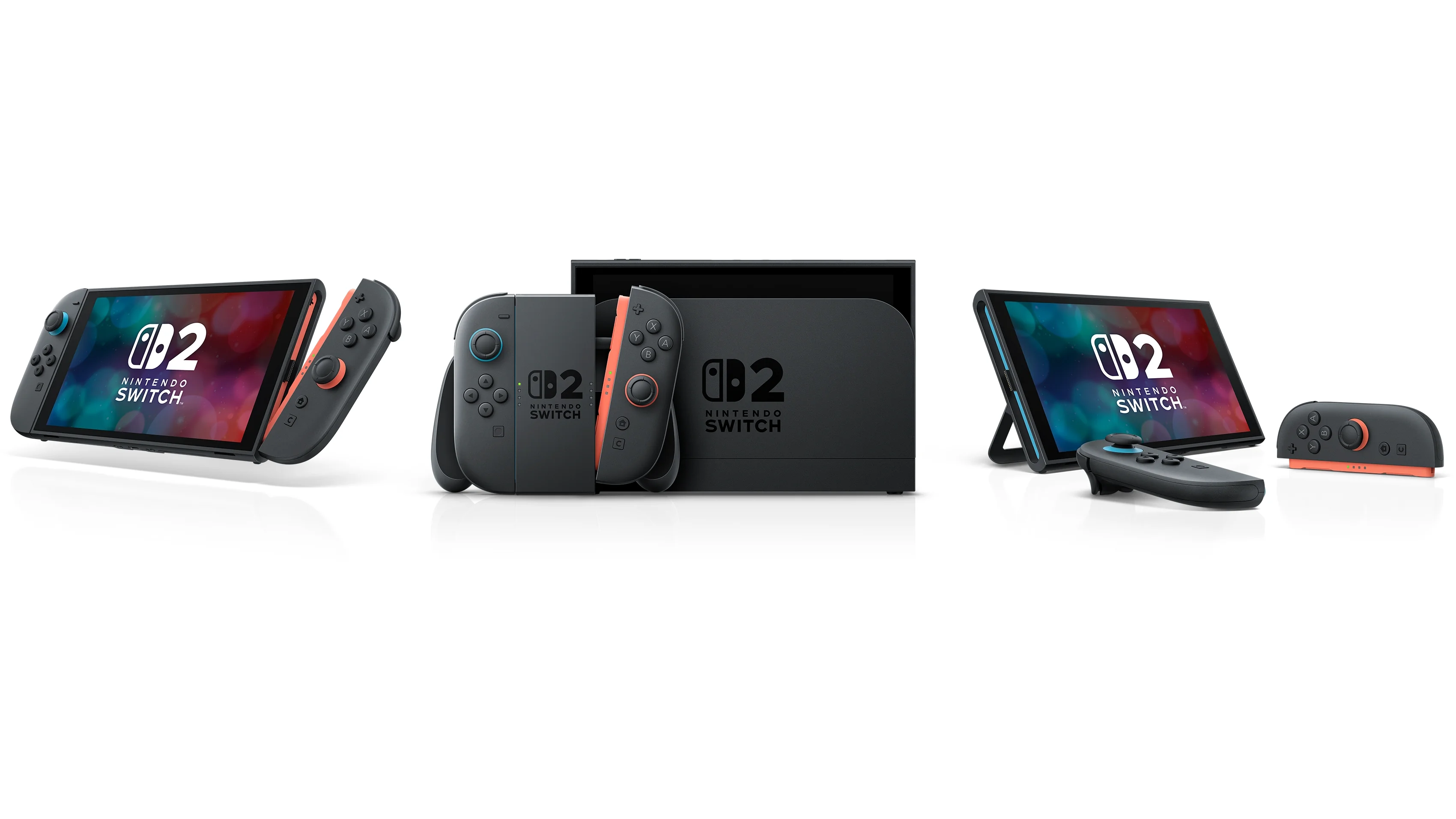
The first thing you notice is how the Switch 2 feels in the hand. The chassis is more rigid, the surfaces are finished more carefully, and the overall weight distribution is better than the original. The Joy-Cons snap into place with magnets — a small thing on paper, a real upgrade in practice — and the whole device finally feels like it belongs at its price point.
There is a flip-side, though. The original Switch had a more playful, more colourful personality. The Switch 2 trades some of that charm for a cleaner, more serious look. Whether that is a win depends entirely on what you wanted from a Nintendo console.
Screen Quality
The display is excellent. It is not OLED, which will disappoint anyone hoping Nintendo would follow up the OLED model of the original generation with another step forward, but the LCD panel here is genuinely good. Colours are vibrant, text is sharp, and games look more modern than the older Switch could manage. In handheld mode, this is the single biggest visual upgrade.
The lack of OLED is worth flagging, particularly if you are coming from a Switch OLED. Dark scenes and HDR-style content do not pop in the same way. Outside of that specific comparison, the panel holds up well in everyday use.
Battery Life and Portability
This is where the trade-off bites. In typical use we found battery life sits at around three hours, depending on the title. Lighter games push it a little further; demanding ones land below.
For context, the original Switch could comfortably run for around five hours, again depending on the model and the title. The Switch OLED in particular was a genuinely all-evening device. Switch 2 is not.
For a console marketed as a hybrid, this is a meaningful regression in the portable half of the equation. Long flights, train trips, and "I'll just play in bed" sessions all run out of headroom faster than they used to. Plan around a charger.
Magnetic Joy-Cons and Connector Concerns
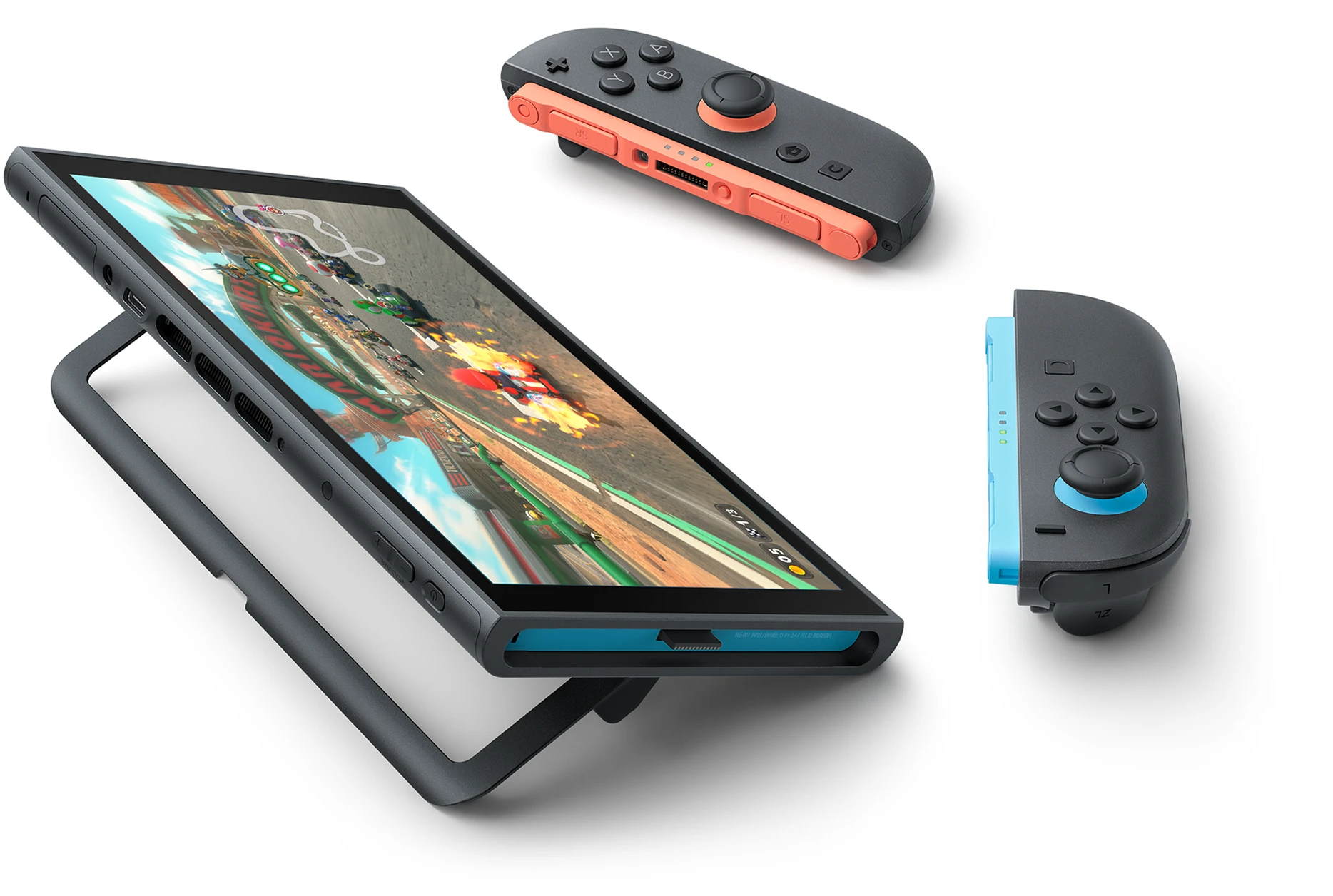
The magnetic Joy-Con mounting is the standout hardware change. They click on, they click off, and the whole interaction feels modern in a way the rail-and-slide design of the original never did.
That said: the new connectors look and feel less robust than the older rails. They are smaller, they are exposed, and they will not enjoy being yanked or dropped on. We would treat them with more care than the original's rails — particularly around children, transport, and any kind of rough handling. Whether they hold up over years of use is a question the long-term won't answer for a while.
Joy-Con Mouse Mode
Joy-Con mouse mode works as advertised. You can pop a Joy-Con onto a flat surface and use it like a pointer for compatible games. It is a clever idea, and it lands well enough technically.
In practice, though, it feels more like a gimmick than a daily-use feature. It is fine when a game leans on it. It is forgettable when it doesn't. We would not buy the system for it, and we would not avoid the system if it did not exist.
Dock Design and Scratch Concerns
The dock is a real improvement over the original. It feels more premium, the materials are nicer, and the cable management is less clearly an afterthought. Plugging the console in is more pleasant than it used to be.
The catch: the inside of the dock has a shiny finish that is prone to picking up scratches from the console as you dock and undock it. It is a cosmetic issue, not a functional one, but it shows up faster than you'd expect on a brand-new product. A simple matte or felt-lined interior would have avoided the problem entirely. Beyond that, the overall dock concept is still a recognisable evolution of the original — not a fundamental rethink.
Game Key Cards and Ownership Concerns
This is the part of the Switch 2 story that deserves the most attention, and it gets the least.
Many third-party physical releases on Switch 2 do not contain the full game on the cartridge. The card acts more like a key — proof that you own the title — and the actual game data is pulled down from Nintendo's servers. Nintendo's own first-party releases are more likely to ship with the full game on the card, but for a wide range of third-party titles, the physical card is closer to a download token than a real cartridge.
If you are someone who cares about physical ownership, game preservation, offline play, lending games to friends, or being able to play a title in a decade after the servers are gone — this is a serious concern. It is worth understanding before you buy any third-party physical release, and worth weighing against just buying digital outright.
This is not a Switch 2 hardware problem. It is a publishing-model problem riding on the Switch 2. But it is real, and it is the single biggest reason a thoughtful buyer should slow down before assuming a boxed game is the same kind of artefact it used to be.
Games Library and Paid Switch 2 Upgrades
The launch library is the other thing worth being honest about. A real portion of what you can play on Switch 2 today is upgraded or carried-over Switch 1 software. Some of those upgrades are genuine — sharper resolution, better frame rate, faster loading — and some of them are charged for separately.
Nintendo charging for graphical upgrades to titles you already own is not unprecedented, and not necessarily unreasonable in every case, but it is worth being a critical buyer about. Some upgrades are clearly worth it. Others feel like quiet double-dipping. It pays to check the specific upgrade and the specific game before you spend.
Truly new, Switch 2-only experiences are still thin on the ground at the time of writing. That will change — Nintendo libraries always grow into their hardware — but if you are buying today specifically for new games, expect to wait.
Final Verdict — Should You Buy It?
The Switch 2 is a good console. The hardware is more premium, the screen is excellent, the magnetic Joy-Cons are a real upgrade, and the dock is finally where it should have been all along.
But as a pure portable, the original Switch — and especially the Switch OLED — still has the edge. Battery life is the most obvious reason, but the original's playful personality and the certainty that the cartridge contains the game both quietly count for more than spec sheets give them credit for.
If you mostly play docked, if you want the best-looking Nintendo screen you can hold in your hands, and you understand the game key card situation going in, the Switch 2 is an easy recommendation. If your main use case is portable play, or if physical ownership matters to you, the upgrade is less obvious than Nintendo would like it to be. Buy with eyes open.
Key Takeaways
- Switch 2 feels more premium, but less charming than the original
- Battery life is the biggest portability compromise — around three hours vs roughly five on the original
- The screen looks excellent despite not being OLED
- Game key cards are a serious concern for physical ownership of third-party releases
- The original Switch still has an advantage as a pure portable
Support BlastPixels
BlastPixels is independently run. If you find the content useful, your support helps keep it going.